Calcium-deficient hydroxyapatite (CDHA; Ca–P–O–H system without foreign ionic substitutions) is one of the most extensively studied synthetic bone graft materials. Its popularity stems from its close resemblance to natural bone mineral and its excellent biological performance in bone regeneration applications.
Yet despite decades of research, a surprisingly simple question remains unanswered: What exactly is CDHA?
A newly published review in Acta Biomaterialia* by Marc Bohner, Nicola Döbelin, Christophe Drouet, Maria-Pau Ginebra, Yassine Maazouz, and David Marchat examines this question in depth and challenges several long-standing assumptions about the material.
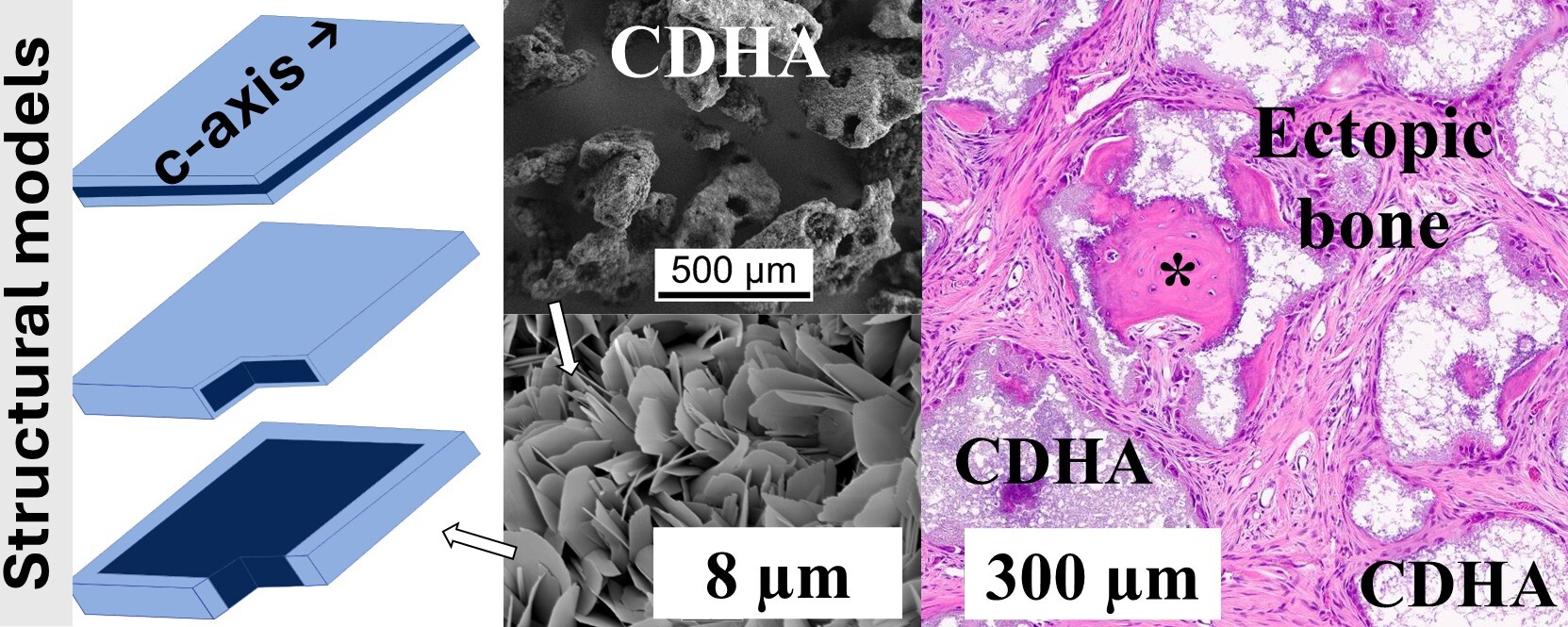
More than a Crystal
CDHA is commonly described through its calcium-to-phosphorus ratio, which differs from that of stoichiometric hydroxyapatite. However, the review highlights that this description only tells part of the story. Evidence from X-ray diffraction, NMR spectroscopy and other analytical techniques suggests that CDHA consists of two distinct components:
- a crystalline apatite core
- a hydrated, ion-rich surface layer only a few nanometers thick
Although this hydrated layer represents only a small fraction of the material mass, it plays a disproportionate role in determining how the material interacts with its biological environment .
The Importance of the Hydrated Layer
The review identifies this hydrated surface layer as a key driver of several important properties:
- Solubility and dissolution behavior
- Ion-exchange capacity
- Interactions with proteins and biological fluids
- Cellular responses and tissue integration
In other words, many of the biological properties often attributed to the bulk composition of CDHA may actually be governed by its surface chemistry.
This insight helps explain why materials with very similar chemical compositions can sometimes show markedly different biological performance.
Is CDHA One Material or Many?
One of the central conclusions of the review is that CDHA may not be a single, clearly defined compound. Depending on synthesis conditions, maturation processes and characterization methods, materials described as "CDHA" can differ substantially in their structure and surface chemistry. As a result, researchers may sometimes compare materials that share the same name but possess different physicochemical properties.
This finding highlights the need for more rigorous and standardized characterization methods throughout the field.
Structure Matters as Much as Chemistry
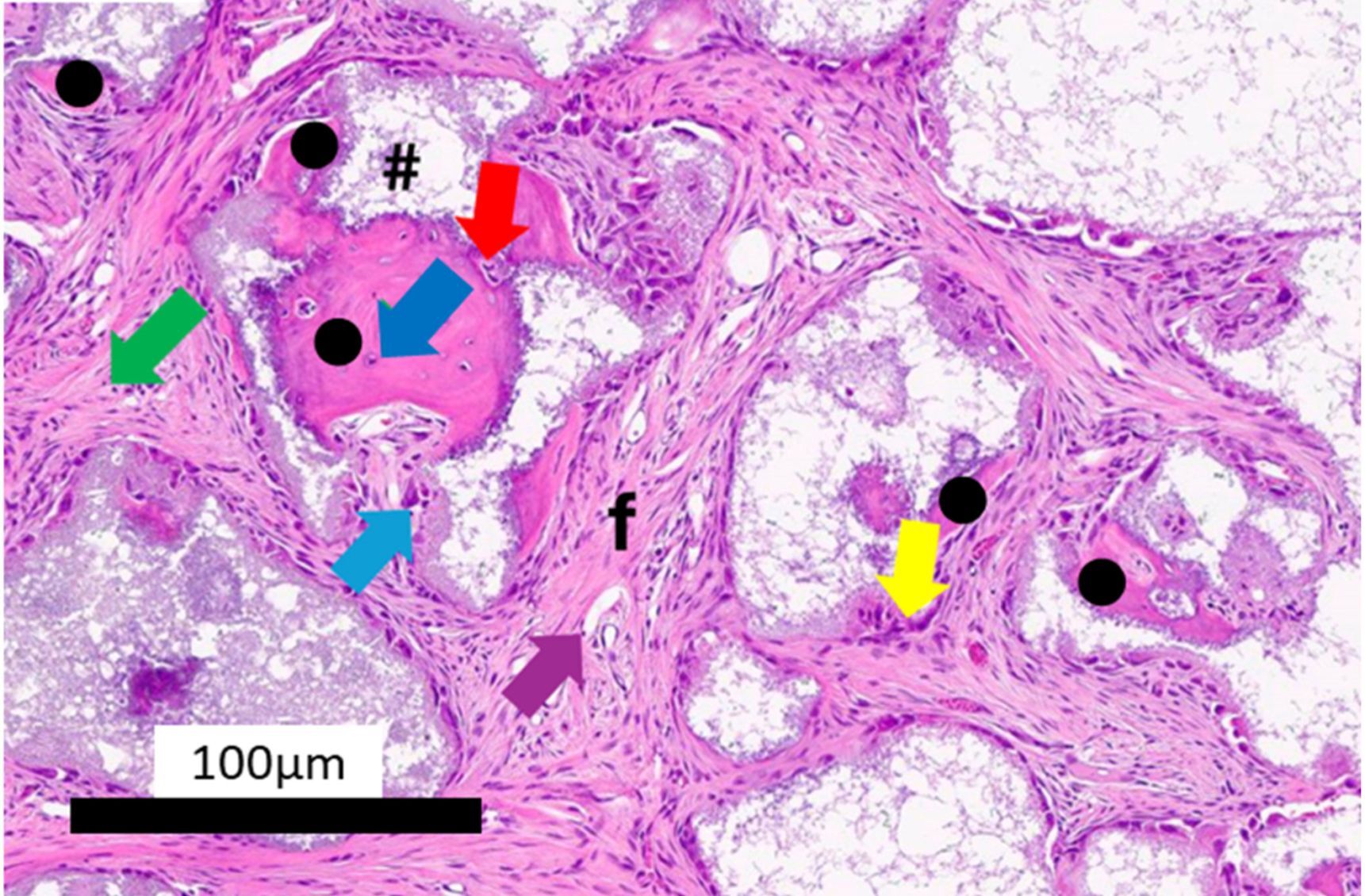
The review also examines decades of in vivo data on bone regeneration. An important observation emerges: material architecture often has a stronger influence on bone formation than subtle variations in chemical composition.
Parameters such as:
- Macroporosity
- Pore interconnectivity
- Pore entrance size
- Specific surface area
can significantly influence tissue ingrowth, vascularization and ultimately new bone formation.
For developers of bone graft substitutes, this reinforces the importance of considering material structure and surface properties together rather than focusing solely on chemical composition.
A Roadmap for Future Biomaterials
Beyond summarizing current knowledge, the review provides a framework for future research. By clarifying terminology, identifying characterization gaps and emphasizing the importance of the hydrated surface layer, the authors propose a more consistent approach to studying and designing next-generation calcium phosphate biomaterials.
Understanding these subtle structural features will help researchers better predict material behaviour and develop bone graft substitutes that more closely mimic the biological performance of natural bone.
The review article “Calcium-Deficient Hydroxyapatite as a Bone Graft Material: From Hydrated-Layer Chemistry to Clinical Performance” is now available as an open-access publication in Acta Biomaterialia.



![A Dialogue Between Research, Industry, and Clinical Practice: The Program for [MEET THE EXPERT] Implants 2026](https://www.rms-foundation.ch/hubfs/01%20Bilder%20-%20Logos%20-%20Icons/Bilder%20MtE/Banner_MtE.jpg)